


When students practice metacognition, the act of thinking about their thinking helps them make greater sense of their life experiences and start achieving at higher levels. Most teachers know that if students reflect on how they learn, they become better learners. With greater awareness of how they acquire knowledge, students learn to regulate their behavior to optimize learning. They begin to see how their strengths and weaknesses affect how they perform.
Metacognitive strategies are techniques to help students develop an awareness of their thinking processes as they learn. These techniques help students focus with greater intention, reflect on their existing knowledge versus information they still need to learn, recognize errors in their thinking, and develop practices for effective learning. After the students become more aware of their metacognitive strategies, they can work on their own in building up and developing their personal strategy alone or with minimal professional help.
To help students within the CogniQuest project, the partners developed 30 new ready-to-use tools for students. After the students better understand their metacognitive strategies, they can choose the best tools for their learning processes. The templates reflect all of the metacognitive strategies, and they are easy to use for the students alone or with minimal support from their teachers, other educational professionals or their parents.
Topics covered by the ready-to-use tools
- How to introduce metacognition in the classroom?
- Encouraging students to reflect on their learning
- Building an environment conducive to metacognitive reflection
- Dealing with students’ resistance to reflecting on their learning
- Integrating metacognitive rituals into everyday life
- Peer review: encouraging constructive criticism
- Improving group discussions through metacognition
- Encouraging student self-assessment
- Time management and learning planning
- Identifying and naming emotions in learning
- Managing stress and anxiety about learning
- Developing empathy through metacognition
- Adapting metacognition for students with special needs
- Adapting metacognitive tools for allophone students
- Involving families in the support of students with special needs
After a learner examines their learning process and spots the potential problems, they will need support to find the solution. To support the students and their educators, CogniQuest project offers 30 ready-to-use tools so they can try to find the perfect one for the independent needs of the students. As always, we pay particular attention to adaptability and accessibility.
Ready-to-use tools consist of 2 parts – explanation template and worksheet template. The explanation template gives you the title of the tool, metacognitive strategies targeted, when and how to use it, materials needed and other tips and suggestions. Explanation template is accompanied with a worksheet template that helps you achieve the set goals and make the learning process easier.
Examples
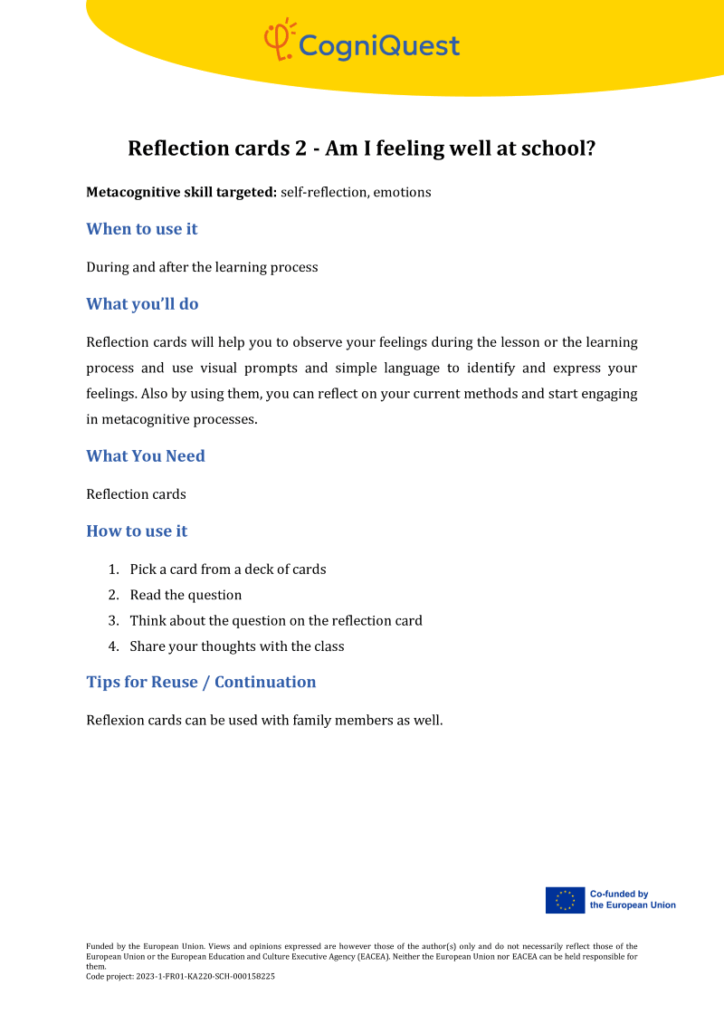
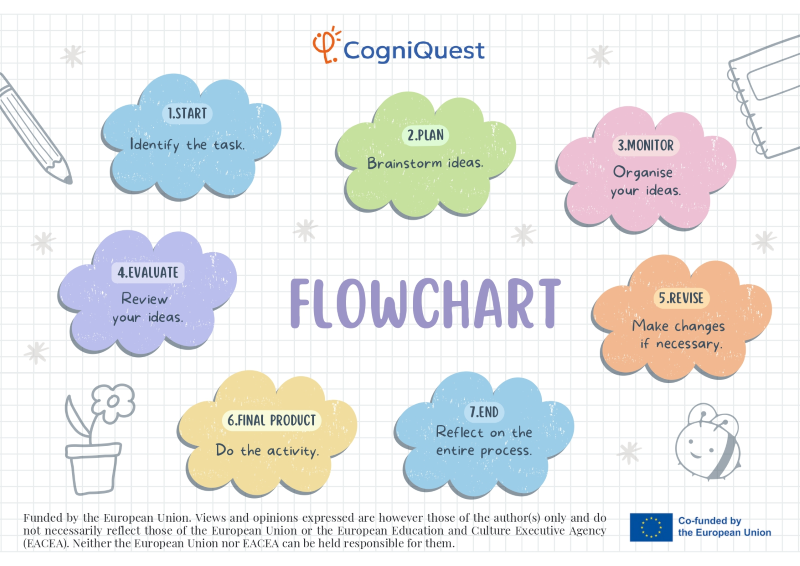
Ready-to-use templates are useful because they provide structured guidance for students to practice and improve their self-awareness and regulation of learning, which can lead to higher grades, better study habits, and increased confidence. These templates act as a practical tool for both students and teachers to engage with and understand the process of learning, offering prompts to plan, monitor, and reflect on their own thinking and progress.
References
https://www.edutopia.org/blog/8-pathways-metacognition-in-classroom-marilyn-price-mitchell