


As part of the CogniQuest project, the partnership has designed a card game to introduce pupils to metacognition in a simple, engaging way. Inspired by the well-known family game Sushi Go, this activity was developed with the support of a focus group of primary and middle school teachers. The aim is to provide children aged 8–12 with a fun opportunity to reflect on how they learn, while playing together.
Where it all started
The idea came from Les Apprimeurs, the French partner of the project, who brought together a working group of teachers and education experts. Their discussions revealed a common challenge: although metacognition is increasingly recognised as important, many available resources remain highly academic or overly focused on memorisation strategies. Teachers expressed the need for something more accessible for younger pupils, able to link classroom learning with everyday experiences.
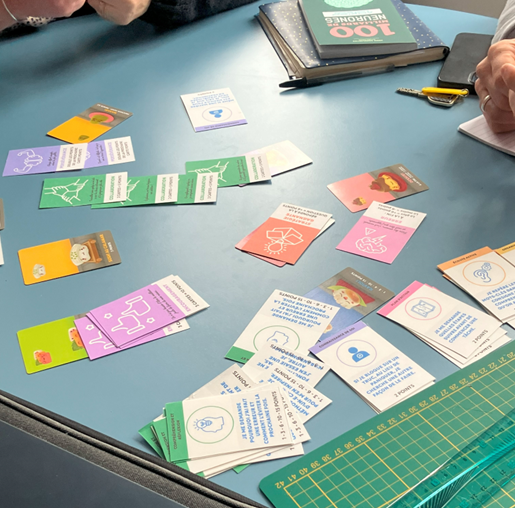
The group also highlighted the need to go beyond explicit metacognition—when pupils consciously reflect on their learning—and to consider implicit metacognition, which involves unconscious reflections and feelings before taking action. Elements such as self-confidence, motivation, or the belief that “I am bad at maths” strongly influence learning behaviours. The game was therefore seen as a tool to encourage both reflection and discussion around these dimensions, while helping to dismantle common “neuromyths” about learning.
From idea to game
To make the process easier and enjoyable, the partners decided to adapt the mechanics of an existing game and integrate metacognitive strategies. The objective of the CogniQuest game is to gather as many “thinking points” as possible by selecting the best strategies during play. Pupils are naturally focused on winning the round, but the rules deliberately introduce metacognitive elements.
For example:
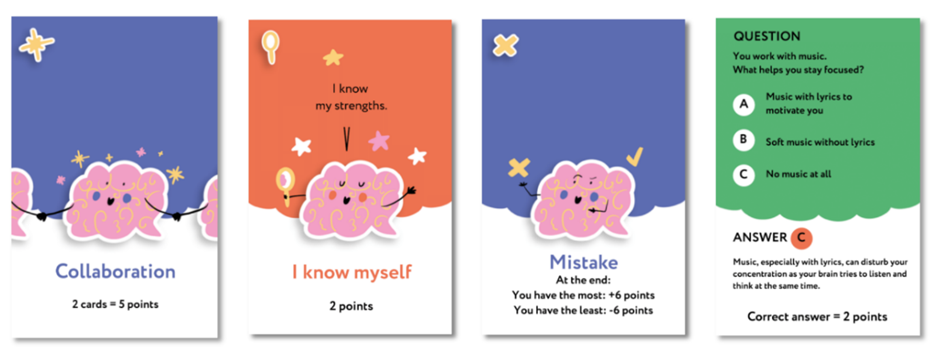
- Some cards value collaboration and learning from mistakes more highly, encouraging pupils to reflect on why these strategies matter.
- Certain actions invite interaction with classmates, such as “Ask the person on your right…”, reminding players that learning is also a social process.
The real learning happens after the game, during a group debriefing where pupils discuss which strategies they used and how these could be applied in real classroom situations.
Why a game on metacognition?
Because reflecting on how we learn is already part of learning itself. By playing together, pupils can:
- Take a step back and think about their strategies, habits, emotions and beliefs.
- Challenge limiting beliefs (such as “I will never be good at maths”) and value personal experiences.
- Engage in dialogue with their peers, learning to listen, compare and discuss different approaches.
How it works
The game is played in three rounds. Each player begins with a number of cards, chooses one to play face down, and then passes the rest to their neighbour. Once all cards are revealed and used, points are counted to determine the winner. While the rules are simple, the strategies pupils use spark important conversations about learning.
Testing and first impressions
The CogniQuest game was tested for the first time in May 2025 with pupils supported by the MLDS (France), who responded with enthusiasm. It was also played by the project partners during the last meeting in Zagreb. The session brought a playful touch to the reunion and gave everyone the opportunity to experience the game, test the rules and discover the winning strategies.
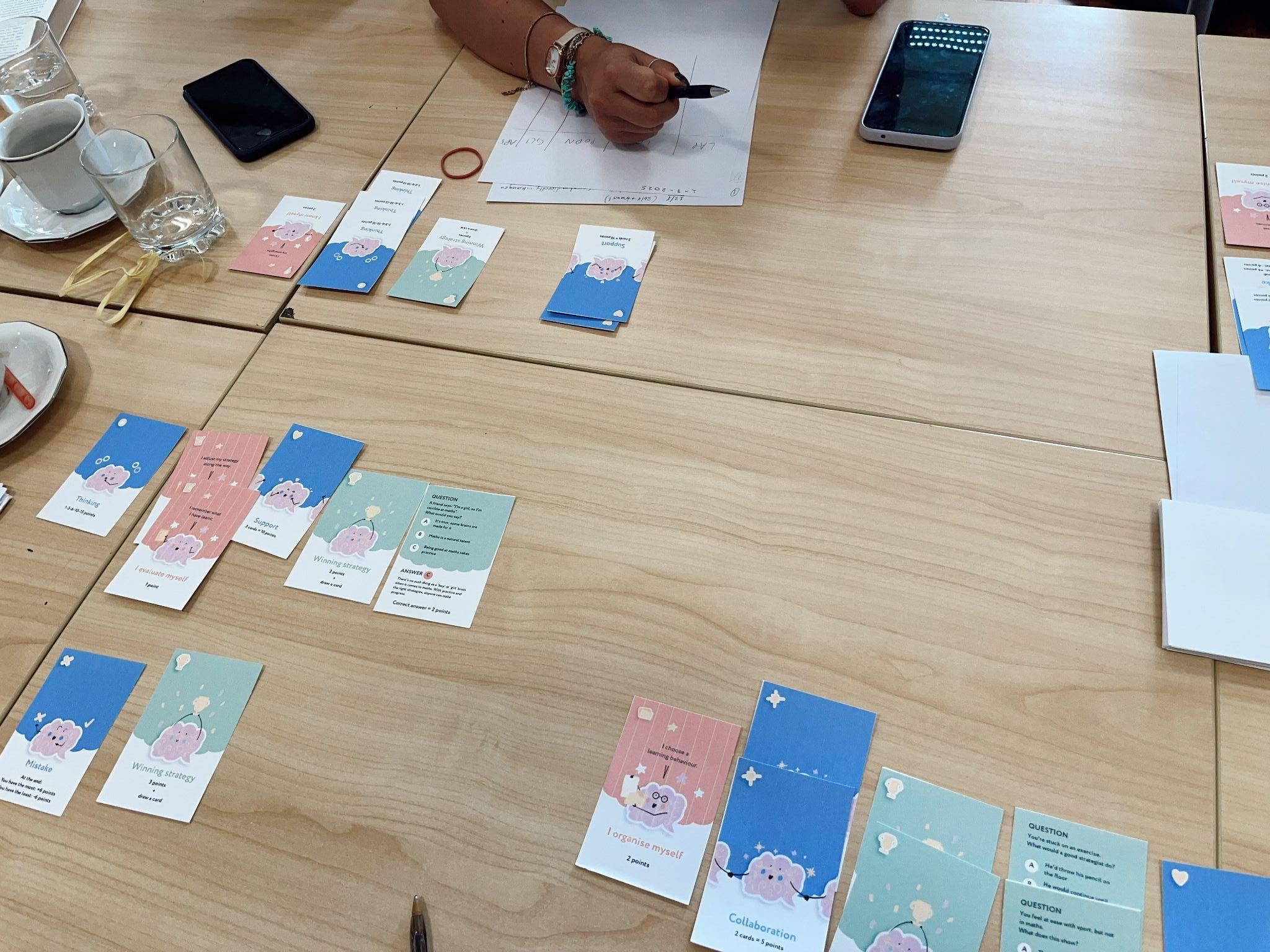
The first results confirm that the game is not only enjoyable but also a valuable tool for encouraging reflection, collaboration and self-confidence in pupils. By embedding metacognition into a playful format, CogniQuest offers teachers and schools an innovative way to introduce these skills, making learning both meaningful and fun.
Don’t wait and download the game on our website!