


Reflective practice is a central cognitive and metacognitive process that enables learners to systematically revisit their experiences in order to reorganize knowledge, understand their emotional responses, and develop strategies for future actions. In international literature, reflection is defined as the individual’s capacity to think about their actions in ways that lead to continuous learning (Cambridge University Libraries, What is Reflective Practice?). As highlighted in the EPALE platform, reflection is not synonymous with overthinking or self-criticism; rather, it is a calm and intentional observation of what occurred, aimed at understanding the experience and planning the next step (EPALE, Reflection in Everyday Life: A Guided Tool for Adults).
Although the concept originates from professional fields such as medicine, teaching, and social work, reflective practice has gained increasing relevance in primary education, where research shows that even younger learners possess the cognitive capacity for reflection when the process is appropriately structured. Reflection allows children to identify challenges, recognise effective learning strategies, and articulate the emotions that shaped their performance. In doing so, it strengthens self-awareness, emotional regulation, and decision-making. These competencies are core elements of metacognition—an essential component of learners’ self-regulation and long-term academic development.
The benefits of reflective exercises for primary school pupils are substantial and span their emotional, cognitive, and social development. Regular expression of thoughts and emotions, even through short reflective writing tasks, has been shown to reduce anxiety and enhance psychological well-being, supported by research on expressive writing and emotional processing (Pennebaker, as referenced in EPALE). Children who engage in reflection become better able to interpret emotional responses, develop empathy, and improve their social interactions with peers. At the cognitive level, reflective practice enables students to understand their own learning process: they recognise effective strategies, identify areas for improvement, and cultivate the ability to evaluate their own progress. This contributes to greater academic self-efficacy and deeper engagement with learning tasks.
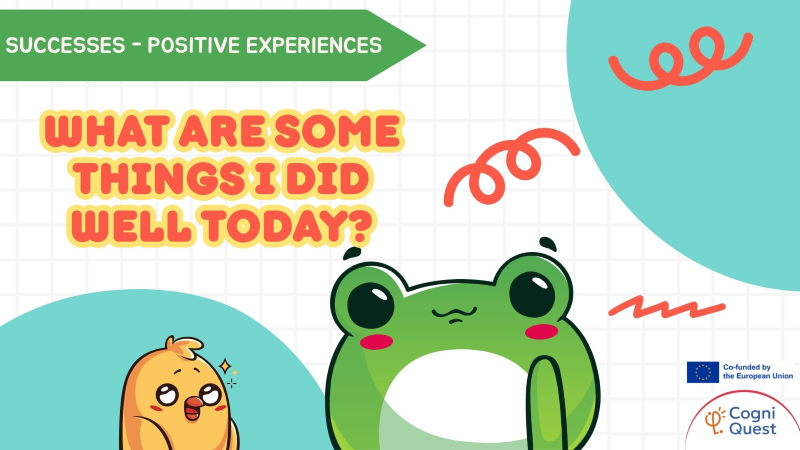
Implementing reflection in primary education requires simplicity, consistency, and age-appropriate design. The literature suggests concise, structured activities lasting five to ten minutes in which students respond to guiding questions about their learning or daily experiences. Prompts such as “What did I learn today?”, “What challenged me?”, “Which emotion did I feel most strongly?”, and “What will I try differently tomorrow?” help children gradually develop an internal routine for processing their experiences. For younger pupils, reflective drawing can be used to represent emotions or events visually. Teachers may also encourage pupils to commit to small, actionable steps—known as micro-actions—that reinforce the practical application of insights acquired during reflection. Weekly reviews of previous entries, facilitated by the teacher, can support the identification of patterns, progress, and recurring themes.
The pedagogical significance of reflective exercises is particularly evident in initiatives such as Erasmus+ programmes, where learning is embedded in rich, intercultural, and collaborative experiences. Reflection equips young learners with the cognitive and emotional tools needed to process these experiences meaningfully, allowing them to make sense of new situations, navigate diverse environments, and transform participation into substantive learning. In this context, reflection strengthens intercultural understanding, empathy, and self-directed learning—competencies that align closely with contemporary European educational priorities.
Overall, reflective practice functions as a foundational element in children’s personal and academic growth. It provides a structured means through which learners can evolve cognitively, emotionally, and socially, while fostering a culture of mindfulness and responsible participation. In educational settings that aim to support holistic learner development, reflective exercises represent not merely a pedagogical technique but a transformative process that connects experience with understanding, learning with self-knowledge, and education with personal growth.
References
Cambridge University Libraries. (2025). What is reflective practice? In Reflective Practice Toolkit. Retrieved from https://libguides.cam.ac.uk/reflectivepractetoolkit/whatisreflectivepractice
European Platform for Adult Learning and Education (EPALE). (n.d.). Reflection in everyday life: A guided tool for adults. Retrieved from https://epale.ec.europa.eu/en/blog/reflection-everyday-life-guided-tool-adults
Pennebaker, J. W. (1997). Opening up: The healing power of expressing emotions. New York: Guilford Press.
(Referenced indirectly through EPALE as foundational expressive writing research.)